These
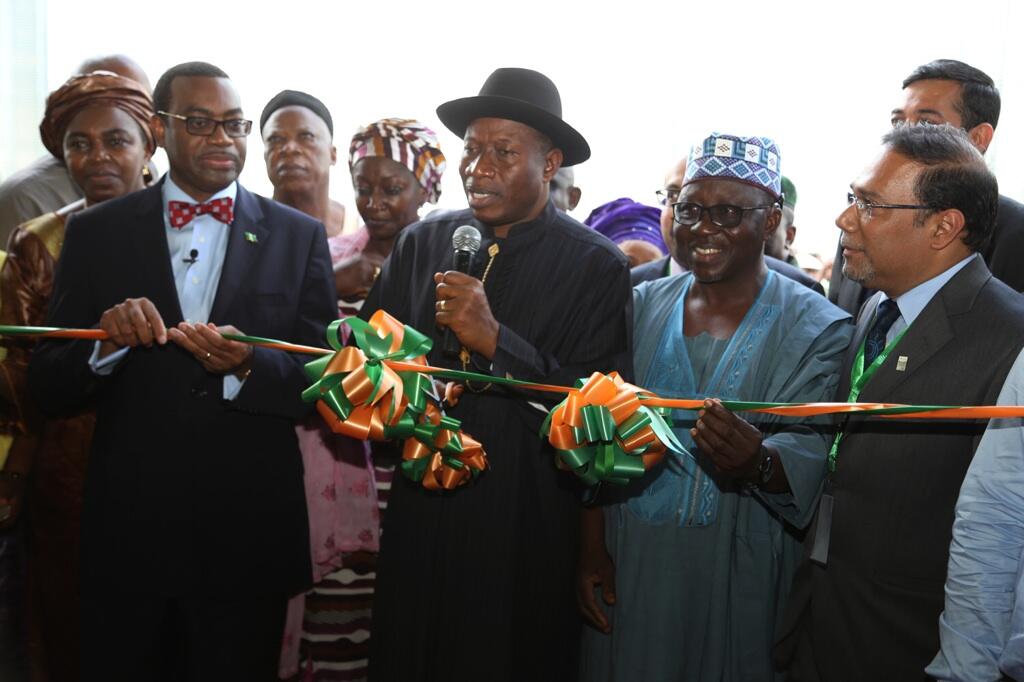
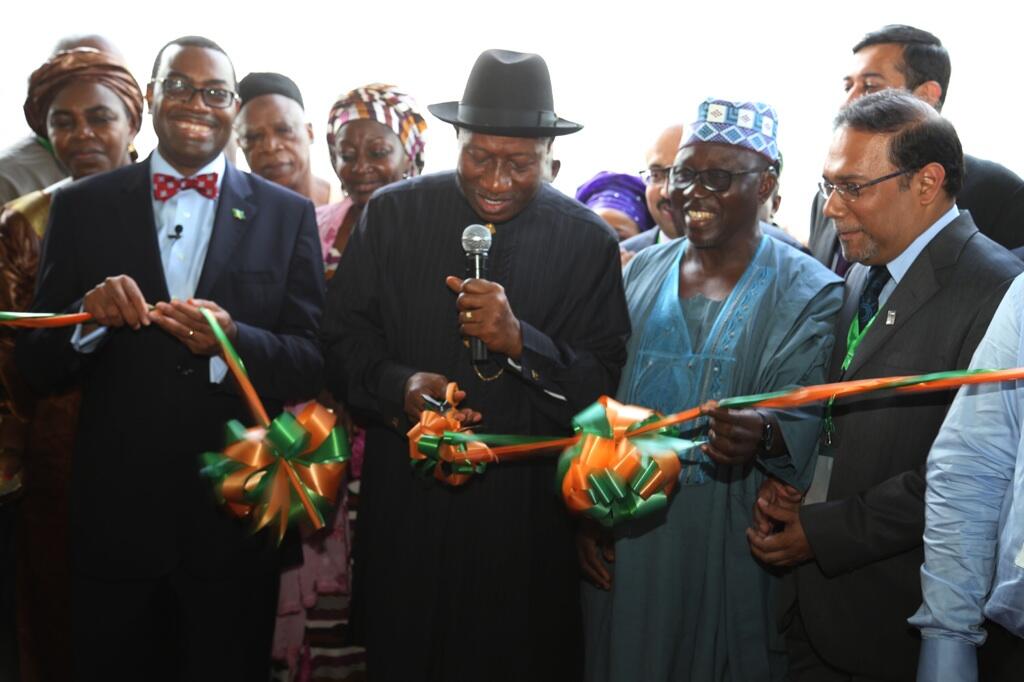
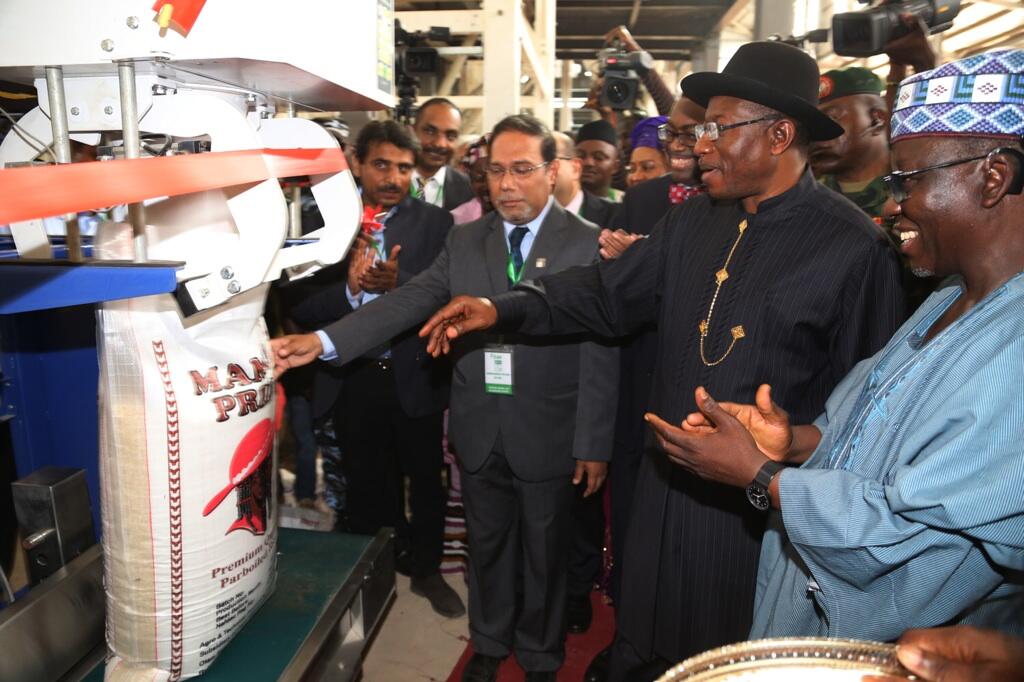
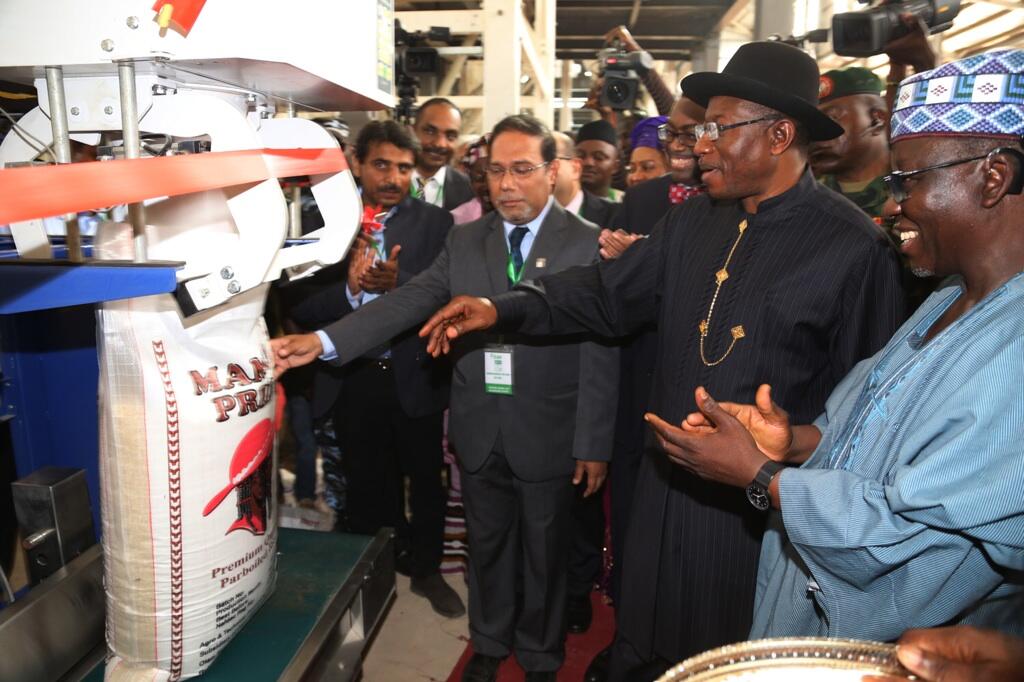
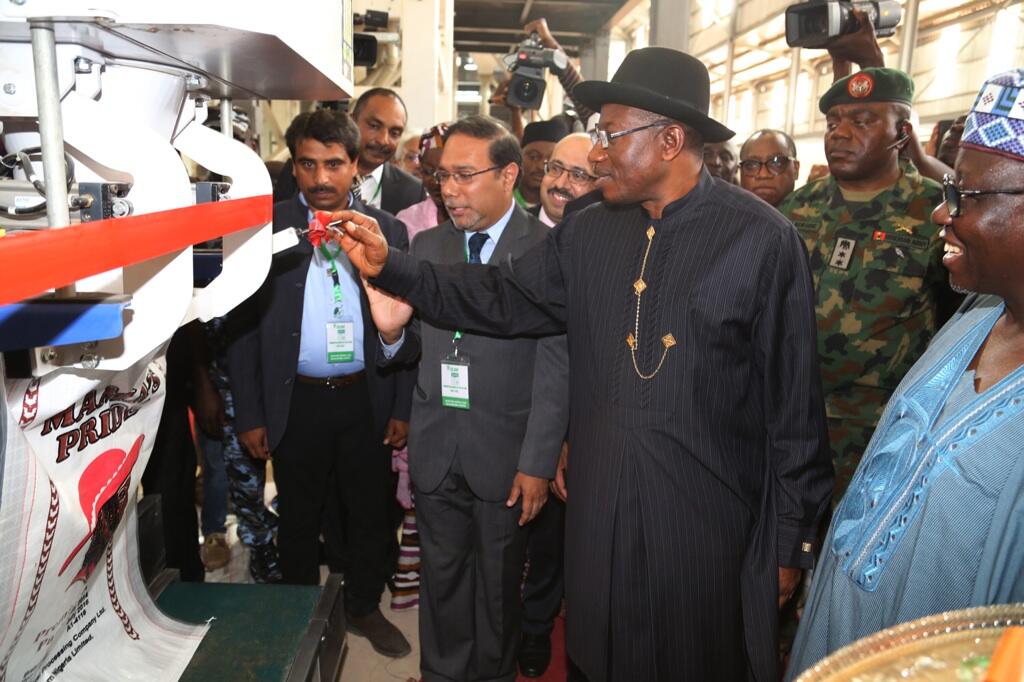
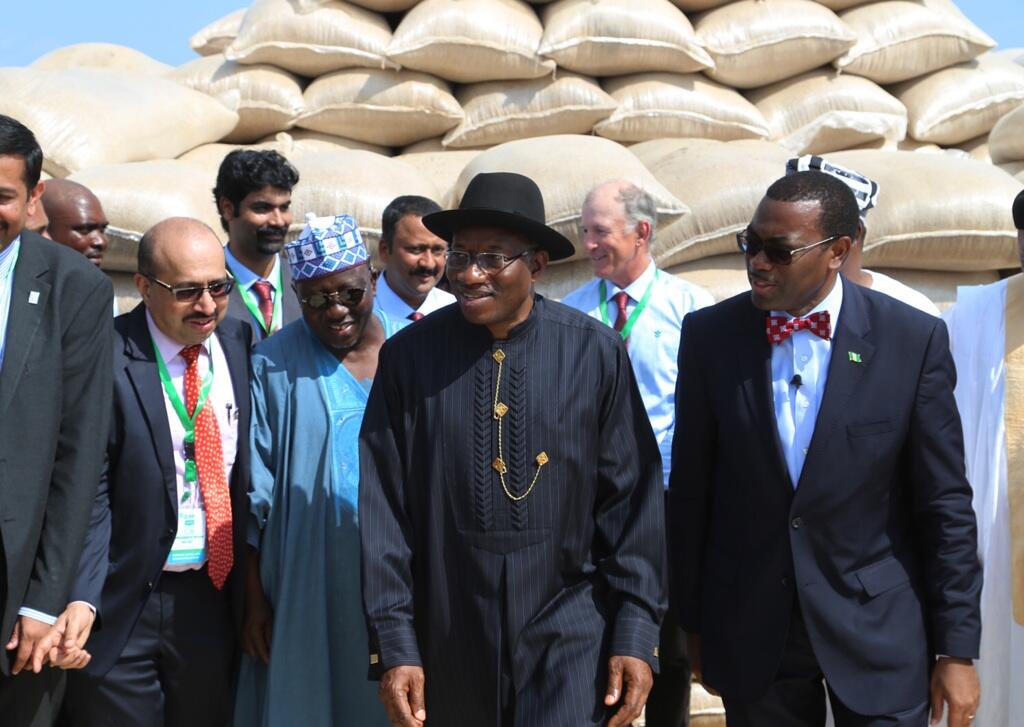
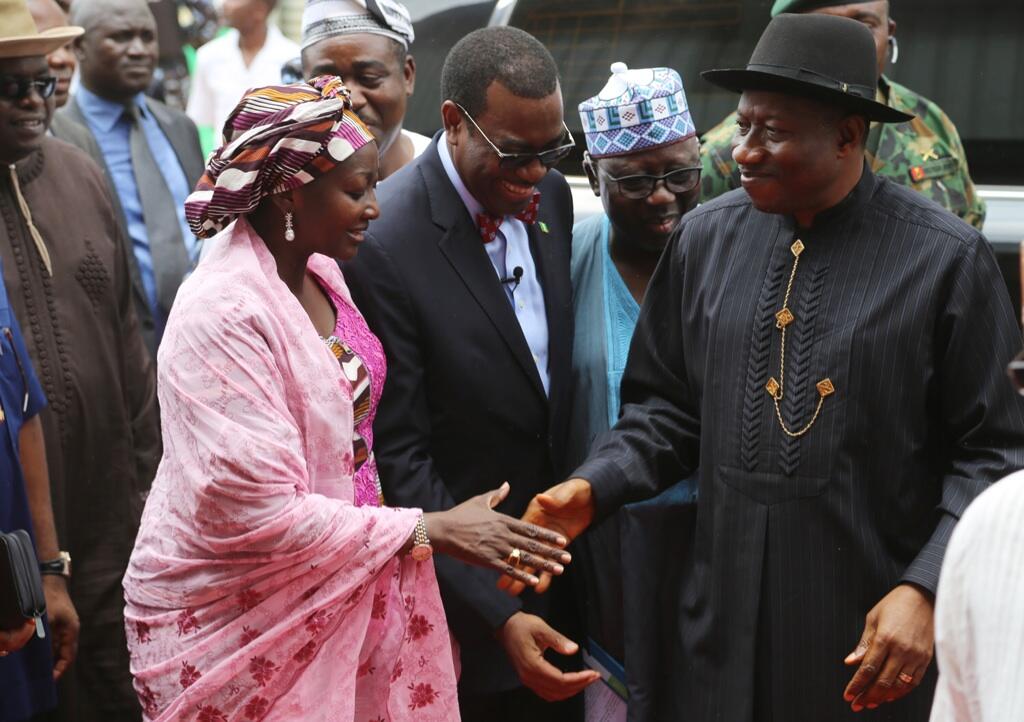
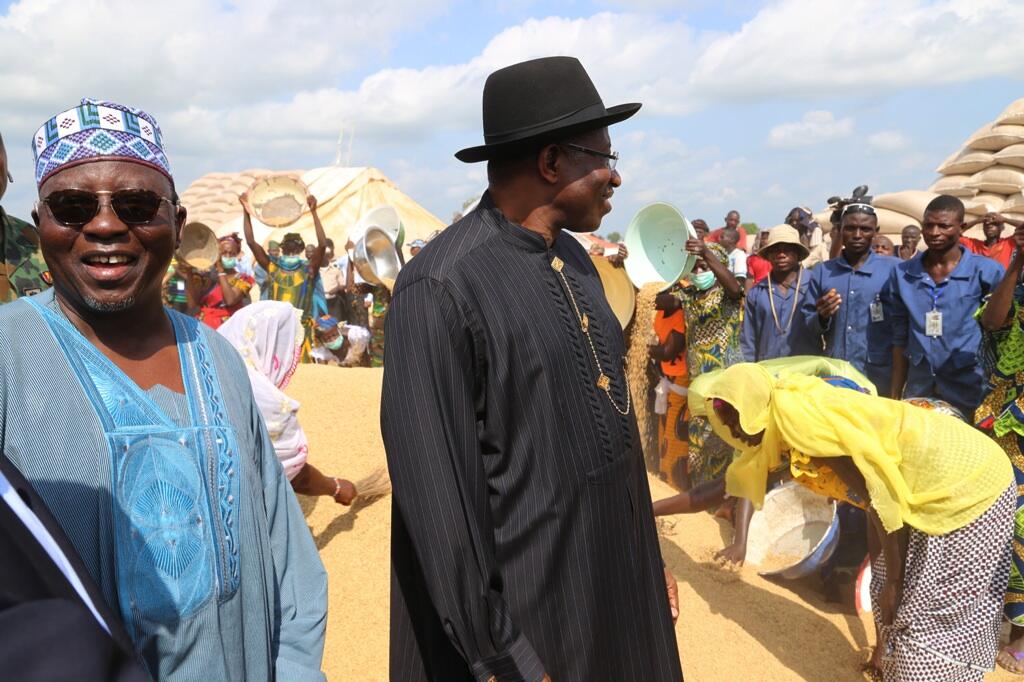
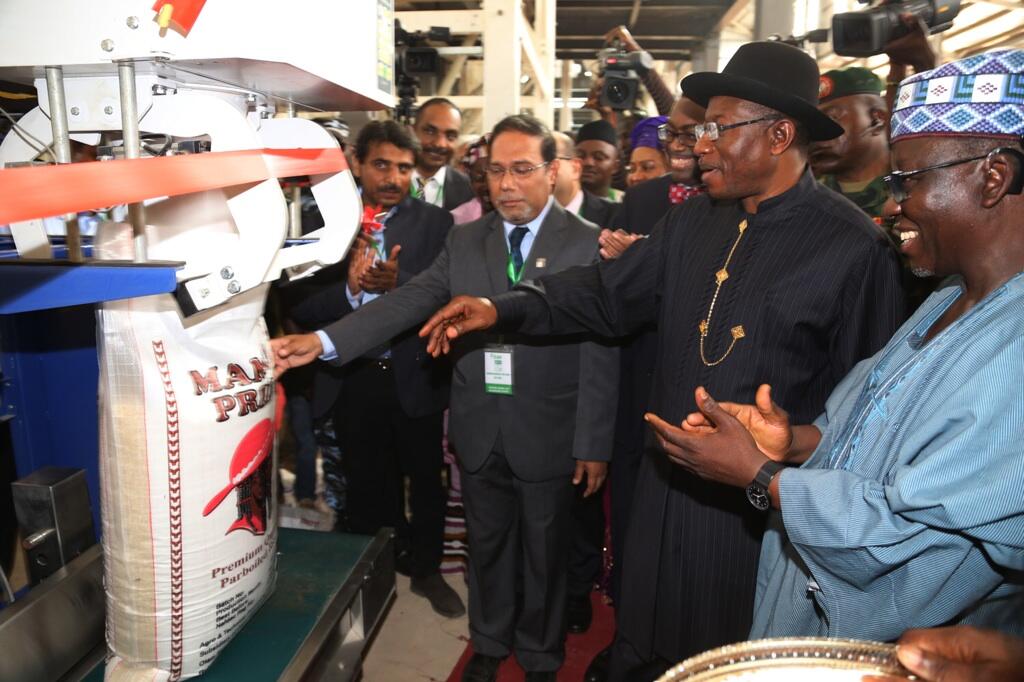
were GEJ's remarks as he commissioned Olam Rice Mills in Nasarawa State today,
Monday July 14 2014.
His Excellency,
President Goodluck Ebele Jonathan, GCFR
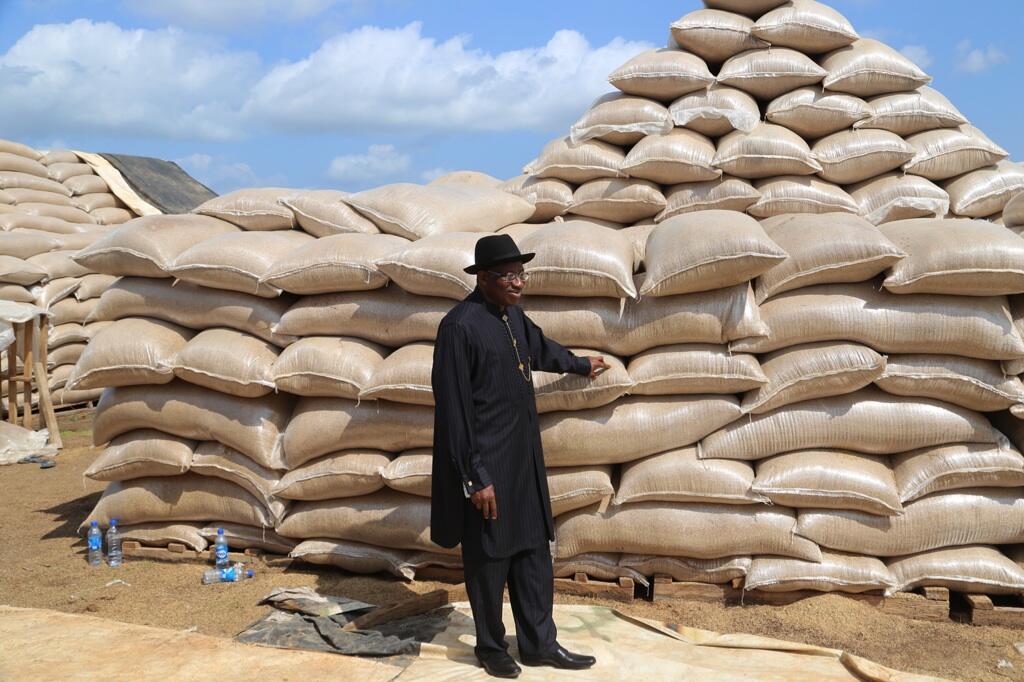
At the Commissioning
Ceremony of Olam Nigeria’s 105,000 Metric Tonnes Integrated Rice Processing
Mill,
Nasarawa State
Monday 14th July,
2014
PROTOCOLS
1. I am very pleased to be here today for the commissioning of the
OLAM Integrated Rice Mill. I congratulate OLAM for its investment in Nigerian
agriculture sector. Indeed, this is a mark of confidence in the success of our
agricultural policies, their effective implementation, and the resilience of
our economy.
2. Nigeria’s position today, as the largest
economy in Africa, in terms of GDP, is important, but not enough on its own. We
must continue working towards becoming the largest producer, and exporter of
food. It is my firm belief, that with our vast land, water and labour
resources, Nigeria has no business being a net food importing country. We shall
continue to work very hard to meet our goal of unlocking all our agricultural
potential.
3. When I launched the Agricultural Transformation Agenda in 2011,
our goal was to add an extra 20 million metric tons of food to our domestic
food supply by 2015. Our progress in this direction has been remarkable.
The innovative electronic wallet system has empowered 10 million farmers with
access to subsidized high quality seeds and fertilizers. We were the first
country in Africa to launch this system that has now assured greater
transparency and better productivity in the sector.
4. Over the past three years, our farmers have produced over 17
million metric tons of food. Steadily on this path, we expect to surpass our
2015 target of 20 million metric tons of food, by the end of this year. Now
with better policy articulation and enhanced technology, our farmers, small and
large, are all being touched by the new drive for food production across the
country.
5. Ladies and gentlemen, we cannot justify the huge amount of
rice we import each year, when we have the potential to produce rice locally.
If we like to eat rice, then we must have to produce more. That is why we have
placed total self-sufficiency in rice production as a priority for our country.
6. Our commitment is
to continue to reduce our food importation bill to the barest minimum. To
demonstrate our commitment, I am glad to report to Nigerians that from a total
food import bill of One trillion, one hundred billion naira (N1.1tr)
($6.9billion dollars) as at 2009, we have reduced our food import bill to Six
hundred and eighty four billion, seven million naira (N684.7billion)
($4.35billion dollars) as at December 2013. Distinguished ladies and gentlemen,
Nigeria must be self-sufficient in food production.
7. In this regard, our rice production program
has continued to receive very focused attention. I launched the national dry
season farming policy last year, so that we can grow two or three cycles in the
year, instead of only once each year. It is encouraging that our national paddy
rice production has grown by an additional 7 million metric tonnes within three
years. This is remarkable but we have to work harder still.
8. The private sector is key to our transformation agenda and
agriculture and rice production cannot be an exception. I am pleased at the
strong private sector response to our rice policy. Recently the number of
integrated rice mills has grown from just one functional, three years ago, to
eighteen, today.
9. These mills are
producing high quality local rice that meets international standards, and
competes well with imported rice. And don’t forget, Nigerian rice is tastier
and healthier than imported rice, because our local rice is fresh from the
farm. Let me add that I am also speaking as a proud consumer of our Nigerian
rice.
10. Our goal of making Nigeria a net exporter of
rice will be achieved faster by encouraging large commercial farms that will
complement our small-scale farmers. Large mechanized rice farms like OLAM’s
6,000-hectare farm will not only boost food production, but also provide
significant opportunities for jobs in rural areas. Our youths will be supported
to go into mechanized farming, and to pursue agriculture as a business.
11. I am very pleased to see that OLAM’s rice farm is inclusive of
the rural communities, especially women and youths. As we encourage large
commercial farms, we will ensure that their development empowers subject
communities and protects their land rights, while boosting their shared
participation in wealth creation, within their communities.
12. We must not just stop at farming, but progressively add
value to all our agricultural produce, building agricultural value chains, from
the farm to the table. The current and planned investment of over $100 million
by OLAM, is a very good example of how to build integrated rice value chains,
combining commercial rice farms, out-grower schemes of small farmers, and
modern rice mills. More of such rice business investments will be promoted with
the various incentives under the new rice policy.
13. As we make progress, I expect that Nigeria will become a net
exporter of high quality finished rice within the next five years. I look
forward to the day when Nigerian rice will go beyond our shores, and be traded
and enjoyed internationally. With the pace and rapid results being achieved
under the Agricultural Transformation Agenda, I believe this goal is well
within our reach.
14. A strong collaboration between the Federal Government and
State Governments, in national development and in the implementation of the
Agricultural Transformation Agenda is very important, and will continue to be
strengthened. States will need to provide secure land for farmers and
agribusinesses, and I commend the Governor and people of Nasarawa State for facilitating a conducive
environment for OLAM’s business to thrive, with benefit to the people.
15. The Federal Government has launched the Staple Crop Processing Zones, to address the infrastructure constraints faced by agribusinesses, and to encourage them to go deeper into our rural areas, to process and add value to our agricultural produce. These zones will be upgraded with improved infrastructure, especially roads, power, water and gas supply, to reduce the cost of doing agribusiness in these rural areas.
15. The Federal Government has launched the Staple Crop Processing Zones, to address the infrastructure constraints faced by agribusinesses, and to encourage them to go deeper into our rural areas, to process and add value to our agricultural produce. These zones will be upgraded with improved infrastructure, especially roads, power, water and gas supply, to reduce the cost of doing agribusiness in these rural areas.
16. The Federal Ministry of Agriculture and Rural Development is working actively with State Governments, private sector and development finance institutions, to mobilize resources to establish these Staple Crop Processing Zones.
17. I am pleased to announce here today, that to buttress the huge
investment and the locational development already in place here, the OLAM farm
area is hereby designated a Staple Crop Processing Zone. I direct that the
Ministries of Agriculture, Works, Power and Water Resources work jointly and
assiduously to facilitate infrastructure support systems around this zone and, indeed all other Staple Crop
Processing Zones, as part of our National Infrastructure Master plan.
18. I congratulate the Minister of Agriculture and his team,
and all the staff of OLAM for this very encouraging demonstration of what
strong public-private sector partnerships can achieve. Let me assure you that
my administration will continue to promote public-private sector partnerships
to drive Nigeria’s holistic transformation and our agriculture, to greater
heights, until we fully unlock our potential as a Nation, and achieve our dream
of becoming an agricultural power house.
19. It is now my great pleasure to formally commission the
OLAM Rice Milling Facility to the glory of God and the benefit of our people.
20. Congratulations!

No comments:
Post a Comment
Follow me on Twitter: @toyeenbsworld
Instagram: @toyeenbsworlddubai
Facebook: www.facebook.com/ToyeenB
YouTube: Oluwatoyin Balogun